7 Things I Absolutely Love About Nepal

(From a Kathmandu Girl Who Grew Up Here, Wandered Off, and Keeps Coming Home)
There’s a point in every flight when the plane tips its wings and you see your destination spread below like a secret that’s about to be told. When it happens over Kathmandu, my heart does the same thing the city does: it surges.
I grew up here—in classrooms that smelled like chalk and rain, in alleyways that smelled like incense and frying onions, in a city where rooftops are a social network and prayer flags are the original status update. At twenty-four I left for Thailand to study nursing; four years later I chased the sun to Australia. These days I live there with Pepper (spoiled dog, zero regrets) and Nugget (cat, absolute CEO). But even from a quiet street in Mountain Creek, I can hear Kathmandu in my bones: bicycle bells, temple bells, bus horns, laughter.
People sometimes ask me, “What should I do in Nepal?” I could give you a list. Or I could give you my life. The truth is, the best things to do here are the things that do something to you.
So—here are the seven things I absolutely love about Nepal. They’re not just activities. They’re rooms where I keep parts of myself.
1) Kathmandu — A Beautiful Storm I Know by Heart
Kathmandu isn’t a city that poses from afar. From the sky it looks like a child’s Lego dream project—brick and concrete stacked until the valley runs out of breath. But up close, everything blooms: the carved windows, the inner courtyards, the way a narrow lane suddenly opens into a square that was waiting for you all along.
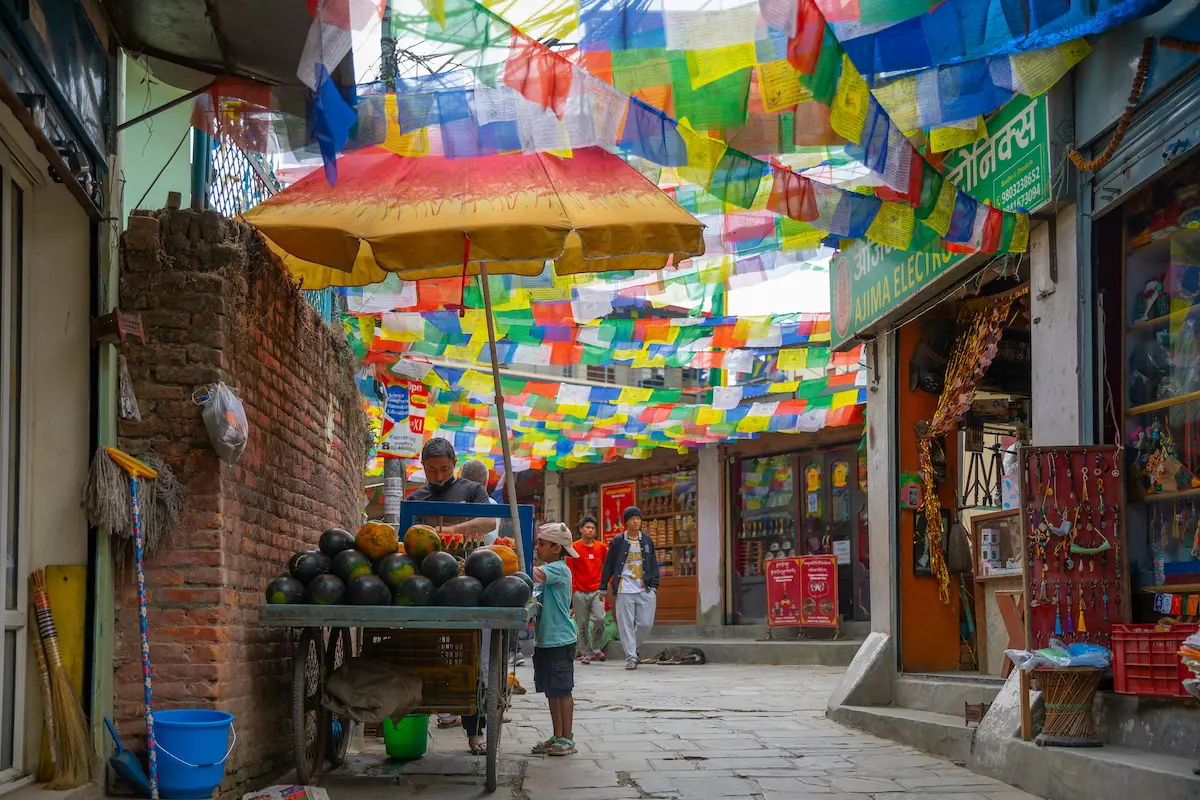
I learned to walk fast here. To dodge motorbikes and sacred cows with equal respect. To read the wind by the way prayer flags snap between rooftops. To order momos like a local and haggle like an auntie. My Kathmandu is not a postcard; it’s a pulse.
On the main roads, you’ll see teenagers surf the city on the bus roofs—clambering up the ladders with backpacks, crates, sometimes a goat that looks like it missed a memo. Men in Dhaka topi hats wink pink patterns at the sun. Shopfronts are a festival of copper pots, marigold garlands, brass bells, pomegranates stacked like small planets. This place doesn’t whisper color—it shouts it.
If you only have a day, people will tell you to tick off the big seven: Swayambhunath where the monkeys supervise you climbing the stairs; Boudhanath where the stupa’s eyes watch you be human; Pashupatinath where devotion smells like smoke and butter; the Kathmandu, Patan, and Bhaktapur Durbar Squares—palaces and pagodas like a chapter you forgot you loved; and Changu Narayan, older than your questions, elegant as a poem. They’re UNESCO World Heritage Sites for a reason, but for me they’re also landmarks in a childhood: exam days, festival days, school trips, getting lost and getting found.
The best part of Kathmandu is always one turn to the right. Off the main road a narrow lane leads to a sunlit courtyard where a gilded shrine is busy with pigeons and toddlers on training wheels. Women sit on steps talking history, gossip, and vegetable prices. The paving stones are rubbed smooth by centuries of feet—traders, pilgrims, teenagers who should be in class. Sometimes I imagine the caravans that once walked this route from Tibet, pausing to pray for good weather and honest luck. The city still walks with them.
I won’t lie: Kathmandu can be a lot. The dust. The power cuts. The days when the whole city feels like an open-air orchestra tuning up at once. But the complaint isn’t the story. The story is how everyone keeps going—with jokes and patience and chai. It’s how every “Namaste” comes with a real smile, not a customer-service one. It’s how the city mutates daily—new layers of color, new shrines tucked into old corners—without ever misplacing its soul.
One evening, on a rooftop near Kasthamandap’s ruins, I watched the light spill across Hanuman Dhoka and a flock of pigeons lift as one. Somewhere a conch shell blew. Somewhere someone bargained for chilies. And I thought: People come here looking for calm, and find aliveness. That’s better.
Sonia’s tip: Put the map away for an hour and let the city lead. Start at Indra Chok, follow the smell of spice to Asan, and see where your feet decide you belong. For a 2-day game plan, try my Kathmandu in 48 Hours.
2) Trekking to Annapurna Base Camp — Where My Strength Showed Up
Trekking in Nepal isn’t exercise. It’s a conversation with the mountains, and they speak in altitude.
On the Annapurna Base Camp trail I learned that patience has a sound: my breath counting to eight, the rhythm of boots on stone, a porter whistling an old song like the air itself is a music sheet. We moved through rhododendron forests where the light was green and forgiving, past waterfalls that insisted on applause, across bridges that made my stomach practice honesty.
There’s a climb before Chhomrong that tastes like effort. Your calves get dramatic. Your lungs write poetry about sea level. A woman in a blue shawl passed me with a basket of vegetables on her back and a grin like she was in on a joke I would eventually understand. “Slowly, sister,” she said. “Slowly is strong.”
At Deurali, the walls narrow and the voices quiet. At Machapuchare Base Camp the stars come close enough to rehearse your secrets. I slept light and woke before dawn because the world was waiting for a reveal.
And then: the Sanctuary. A bowl of peaks standing in a perfect circle like a ring of elders. Annapurna I waking up with a blush. Light falling across ice and rock, then sliding down to our cold noses and open mouths. I cried into my gloves not because I hurt but because I didn’t. Because in that moment the mountain didn’t feel like something to conquer; it felt like something that accepted me for a minute.

We walked back down differently. Stronger, yes—but also softer. A trek doesn’t give you bragging rights. It gives you reverence.
Sonia’s tip: Eat the dal bhat. Hire the guide. Tip the porter. And when a local says “slowly-slowly,” they mean it as a blessing. If you’re new to trekking, start with ABC before EBC—then prep with my trek training basics and budget with trek cost guide.
3) Pokhara — The City That Teaches You to Exhale
Pokhara is where the Himalaya goes on vacation. The mountains lean over Phewa Lake like they’re admiring their outfits. Paragliders drift above like punctuation marks at the end of bold sentences. Cafés spill reggae and cinnamon into the morning. Every time I come here I try to convince myself to do nothing and end up doing everything.
One morning I watched fog unroll over the water like new silk. I rented a wooden boat and paddled until the city got small and the sun got interested. The lake made the kind of quiet that isn’t empty—it’s full. Later, from Sarangkot, the valley unfolded like a quilt you recognize from childhood, and I remembered how to laugh at gravity.
Sonia’s tip: Give yourself one more day here than seems reasonable. Spend a sunrise without your phone and a sunset without your plans.
4) Chitwan — Jungle Nights & Daylight Courage
The jungle is another language Nepal speaks. Chitwan isn’t shy about being alive. The air smells like wet earth and green ambition; the birds keep their own calendar. We took a narrow canoe where the river runs quiet and saw crocodile eyes hold the surface like punctuation. Later, we walked among elephant grass while our guide taught us how to tell a harmless crack from a meaningful one.

“Rhino,” he said, very softly. We stepped behind a tree because that’s the rule and watched a prehistoric silhouette appear like a moving boulder with opinions. My heartbeat tried to audition for percussion. The rhino grazed, flicked an ear, and decided we were a footnote in its day.
At night, the jungle hummed itself to sleep—crickets doing their confident thing, the wind gossiping in the reeds, the moon trying on its reflection. I lay in the dark feeling the outline of my courage, pleased to find it larger than last year.
Sonia’s tip: Choose ethical experiences. No elephant riding, ever. If a company feels off, it is. Vote with your feet and your rupees. Start with my Chitwan wildlife guide.
5) Lumbini — Quiet That Doesn’t Ask Permission
I didn’t expect to love Lumbini because I am an unapologetic extrovert who collects mountains and conversations. But here’s the thing: stillness has charisma.
In Lumbini, monks walk like punctuation marks in a paragraph the day is writing. The air is soft with prayer. Flags whisper across long paths between monasteries; dust glows in the afternoon like it’s rehearsing for a miracle.
Inside the Maya Devi Temple, I stood barefoot on cool stone and felt my pulse slow down until it matched the room’s. No one told me to be quiet; silence just arrived and took my hand. Outside, a child fed wheat to pigeons with the seriousness of a ceremony, and a nun smiled at me the way you do when you recognize someone’s trying to be better.
Sonia’s tip: Spend the night. Let dawn do the talking. Pair Lumbini with a generous day in Patan afterwards if you miss noise in a healthy way. For seasons, check best time to visit Nepal.
6) Nepali Food — The Love Story That Fuels All Others
I have three love languages: words, adventure, and momos.
I’m loyal to the steamed kind dipped in tomato-chili chutney that negotiates with your sinuses, but I’ll flirt with fried. Dal bhat is the marathon meal that keeps your legs honest—rice, lentils, vegetables, pickles, sometimes a little curry surprise. We say “Dal bhat power, 24 hour,” and we mean it like a lifestyle.

There’s also thukpa that forgives you for the rain. Sel roti that forgives you for the cold. Milk tea that forgives you for everything else. On treks, chocolate bars taste like victory medals and soup tastes like an apology from the weather.
In Kathmandu I have an alley that knows my order before I do. In Pokhara I have a stall that claims to be the “Best Momo in Nepal,” which is a violent argument I’m happy to adjudicate weekly. In the mountains, food isn’t cuisine; it’s community. People feed you because that’s how we say stay and come back.
Sonia’s tip: Ask your guide where they eat. The best meals rarely come with English menus; they come with someone’s grandmother’s recipe. Budget with my Nepal trek cost guide.
7) The People — Nepal’s Greatest Treasure
Ask travelers what Nepal gave them and they’ll tell you: a stronger body, a better lung capacity, a photo of sunrise worth the cold. Ask me and I’ll say: people. The country itself is gorgeous; the way we treat one another is what makes it unforgettable.
When the fuel blockade happened years ago, my city learned to queue with jokes. We shared rides, shared chargers, shared patience, shared eye rolls, shared tea. Power outages? Sure. Someone will find candles, someone will sing, someone will tell a story better in the dark anyway. Hospitality here isn’t a business model; it’s a reflex.
As a kid I studied by candlelight when the monsoon knocked the power off its chair. My neighbor—who ran a tiny tailoring shop—would send over hot milk tea “for concentration.” On treks, other groups’ guides have checked on me like cousins. In teahouses, someone always wraps an extra blanket around your shoulders like an ancient spell. Strangers say “Namaste” with their hands and mean I see the light in you—and somehow they do.
I’m proud of us. Proud of Newar artisans carving history into wood. Proud of the women who carry this country forward in bright saris and brighter plans. Proud of the men who laugh loud and cry when it matters. Proud of our festivals—Dashain that repairs the family fabric, Tihar that lights the dark, Holi that insists joy belongs on your skin.
The mountains challenge you; the people make sure you rise to it.
Sonia’s tip: Learn “Dhanyabad.” Thank you. You’ll want to use it more than you expect. New here? Start with my Solo Female Travel in Nepal.
Nepal Is Not a Trip — It’s a Transformation
I left at twenty-four because the world is big and I wanted to be brave in more than one language. Thailand taught me independence; nursing taught me steadiness; Australia taught me space. Nepal taught me how to belong—to a street, to a valley, to a line of peaks that bully the clouds and bless the rest of us.
When you ask me what to do in Nepal, here’s the secret: do the things that do something to you. Get lost on purpose in Kathmandu’s inner lanes. Let a mountain teach you patience. Take a boat into fog and call it therapy. Stand behind a tree because a rhino has right of way. Say a quiet prayer in Lumbini even if you don’t have the words. Eat momos like they’re a love story. And let people be kind to you—not because you need help, but because you’re here, and that’s how we do it.
You’ll go home different. You’ll go home with dust in your shoes and light in your chest and a new setting for the word courage. And if you’re very lucky, you’ll go home planning your return.
Quick Solo Travel FAQs with Sonia
Is Nepal safe for solo female travelers?
Absolutely. Keep your common sense switched on—like anywhere—but know that kindness is our national sport. I trek with licensed guides and trust my gut. Both have saved me from bad snacks and worse decisions. Read more in my solo female guide.
When should I visit?
Spring (Mar–May) and autumn (Sept–Nov) are your best friends: clear skies, festival energy, trail conditions that flirt with perfect. Winter is beautiful but cold; monsoon is moody and lush. Month-by-month breakdown: best time to visit Nepal.
Do I need a guide to trek?
Yes in most regions—and sincerely, you’ll be grateful. A good guide is a storyteller, a weather interpreter, a safe-pace coach, and sometimes a therapist with trekking poles. Start with ABC, then train for EBC: how to train.
Do I need to be ultra fit?
You need curiosity, patience, and shoes that like you back. Fitness helps; heart does the heavy lifting.
Wanna Plan Nepal Together?
Hey, I’m Sonia—Kathmandu-raised, trek-obsessed, proudly Nepali. I live in Australia now with Pepper (dog) and Nugget (cat, micro-manager). I design custom Nepal itineraries for solo travelers—especially women—who want trips that feel bold, safe, and honestly joyful.
- Annapurna Base Camp trek planning
- Kathmandu → Pokhara → Chitwan itineraries
- First-time Nepal adventures with all the hype and none of the stress